(LinkedIn Thought Leadership Sample — Written for a VP of Marketing at a building envelope and wall systems manufacturer.)
There’s a common assumption inside manufacturing companies that contractors don’t trust content because it’s “marketing.”
That’s not really what’s happening.
Contractors will trust information quickly—if it matches what they deal with on a job.
They lose trust when it doesn’t.
And most of the time, the disconnect isn’t in the product itself. It’s in how the product is presented.
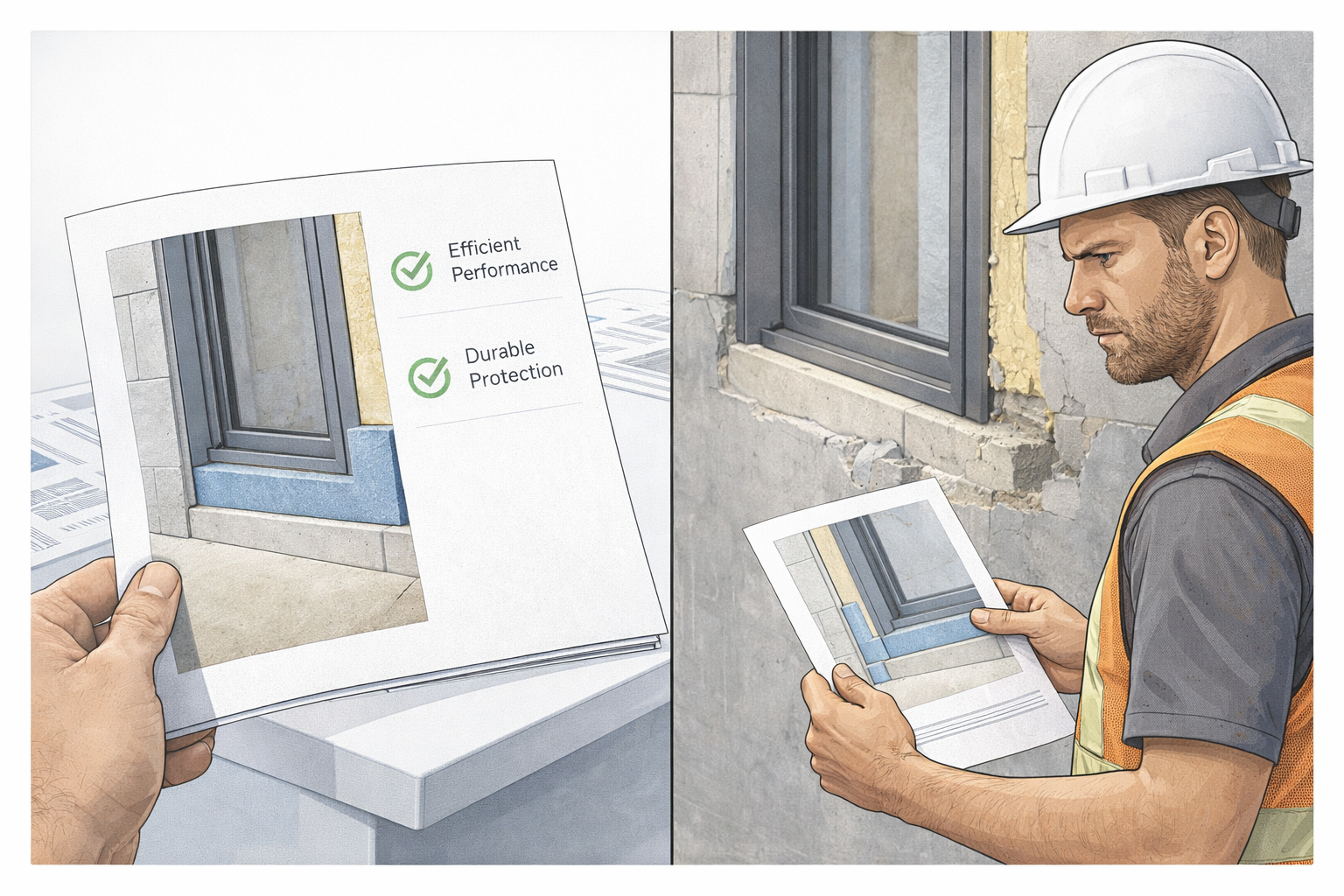
We describe performance.
They’re thinking about conditions.
We show the system working.
They’re thinking about where it usually doesn’t.
That gap is small on paper.
On a job, it’s everything.
Content Shows Ideal Conditions. Jobs Don’t
Most manufacturer content is built around clean installs.
Straight runs. Controlled sequencing. Proper prep.
That’s not wrong. It’s just incomplete.
A contractor isn’t reading your content to see how it works when everything lines up.
They’re reading it to figure out:
- What happens at the transition
- What happens when the substrate isn’t perfect
- What happens when another trade has already moved through the area
When that part isn’t addressed, the content still looks “helpful.”
But it doesn’t answer the question they actually have.
So they keep reading—and then they pick up the phone anyway.
The Sales Call Tells You What the Content Missed
You can learn more about your content from five contractor calls than from a month of analytics.
Because the questions repeat.
Not broad questions.
Specific ones.
- “Can I tie this into what’s already there?”
- “What happens if this goes on before that?”
- “Will this hold up where we’re seeing movement?”
Those aren’t edge cases. That’s the job.
If those questions are still showing up in every call, the content didn’t carry the conversation far enough.
And over time, contractors adjust.
They stop relying on it.
We Write in Product Terms. They Think in Job Terms
This is where most of the disconnect lives.
We talk about:
- performance ratings
- material properties
- compliance
Contractors think in:
- sequences
- transitions
- conditions
That difference sounds subtle until you see how it plays out.
A product page can be technically accurate and still miss the decision.
Because the decision isn’t:
“Is this a good product?”
It’s:
“Will this work the way my job is actually unfolding?”
If the content doesn’t meet that question directly, it gets treated as partial information.
What Changes the Trust
This isn’t about producing more content.
It’s about producing content that can hold up once the job starts moving.
That means:
- Showing where installs tend to break down—not just where they work
- Addressing how your product interacts with what comes before and after it
- Being clear about limitations instead of writing around them
- Using the same language contractors use when they’re talking through a problem
That kind of content doesn’t always look as clean.
But it holds.
And that’s what contractors respond to.
Where This Shows Up First
You don’t see the gap in impressions.
You see it in how conversations start.
If a contractor has to call to figure out what your content left out,
the content didn’t do its job.
And after enough of those calls, they stop expecting it to.
That’s when trust is gone—not in the product, but in how it’s explained.
And once that happens, every conversation has to rebuild from zero.