(LinkedIn Thought Leadership Sample — Written for a Director of Contractor Solutions at a mid-size building envelope manufacturer specializing in air barrier, WRB, and waterproofing systems.)
A builder swapped out a specified product on a job I was familiar with.
It wasn’t a reckless decision. The replacement looked close enough on paper, cost less, and was easier to get. Same general category. Similar thickness. The inspector didn’t flag it.
And for a while, nothing went wrong.
That’s usually how these start.
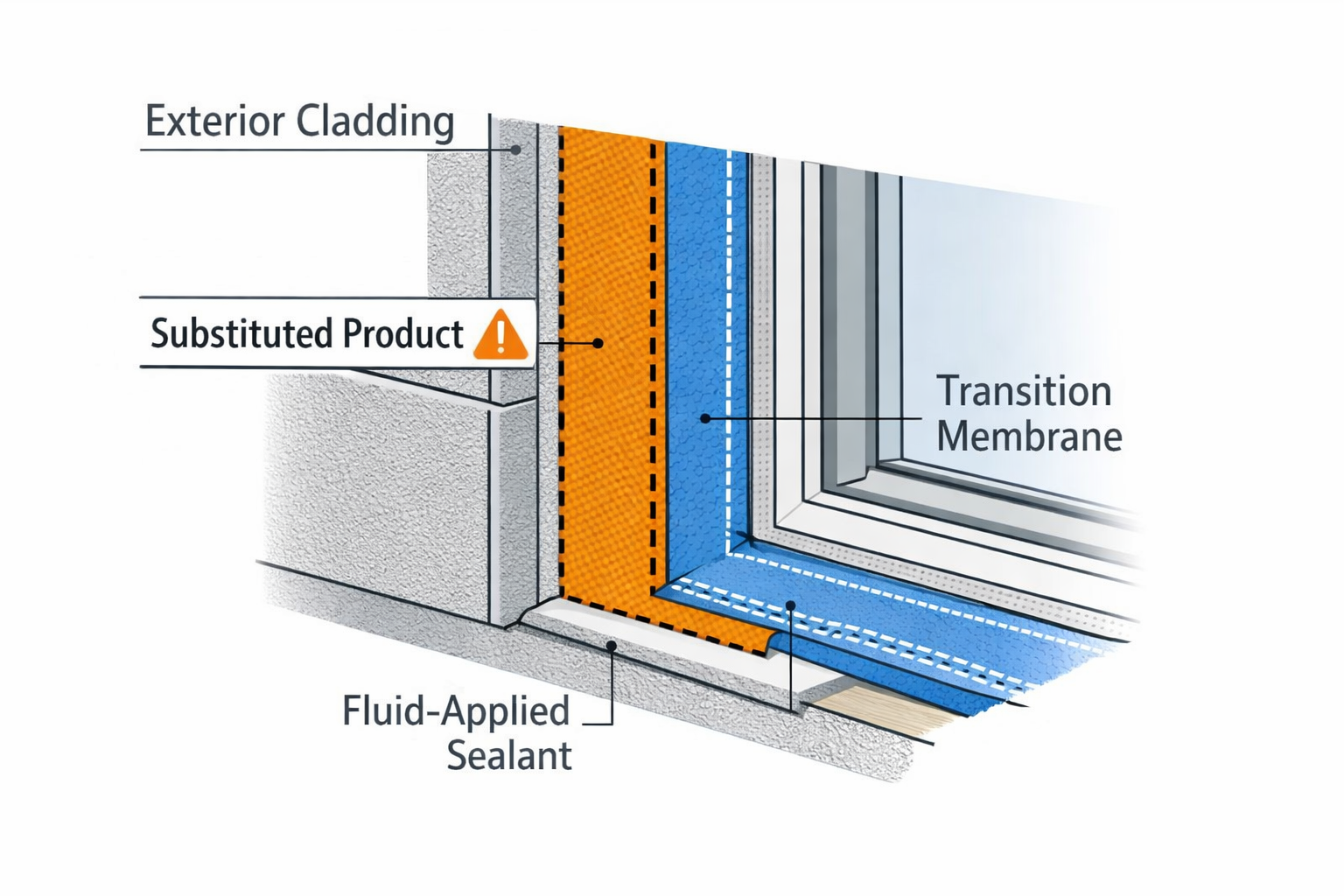
The original spec was system-based. The air barrier, the transition membrane, the fluid-applied detail at penetrations — they were selected to work together. Compatibility at laps. Consistent adhesion behavior at transitions. A fastening sequence that assumed a specific substrate response.
The substituted product wasn’t inferior in isolation. But it wasn’t part of that system.
It bonded differently at the transitions. It handled penetrations differently. Under jobsite conditions — temperature swings, sequencing pressure, trades moving through before close-in — it behaved differently than the system around it expected it to.
Nothing failed on day one.
It showed up later. Moisture at transitions that nobody could trace cleanly. Callbacks that touched three different trades. Conversations about who owned the problem.
The builder didn’t think he was breaking a system. He thought he was swapping a product.
That distinction matters more than most people realize — and it almost never comes up until something goes wrong.
When a product is part of a system, substituting it isn’t just a cost decision. It changes how everything around it behaves.
Most of the time, you don’t see that change until the job is already closed up.