Most window conversations start with pane count. That’s the wrong place to start.
Triple-pane windows can deliver real performance gains — better insulating value, quieter interiors, and improved condensation control. They can also cost significantly more than a well-specified double-pane unit that outperforms them in the field. The difference usually comes down to three things buyers rarely compare: whole-window ratings instead of glass-only claims, frame material, and installation quality.
DOE, NFRC, and ENERGY STAR all point buyers toward whole-window performance and climate-zone fit rather than pane count alone. This article follows the same logic.
How Triple-Pane Windows Are Built
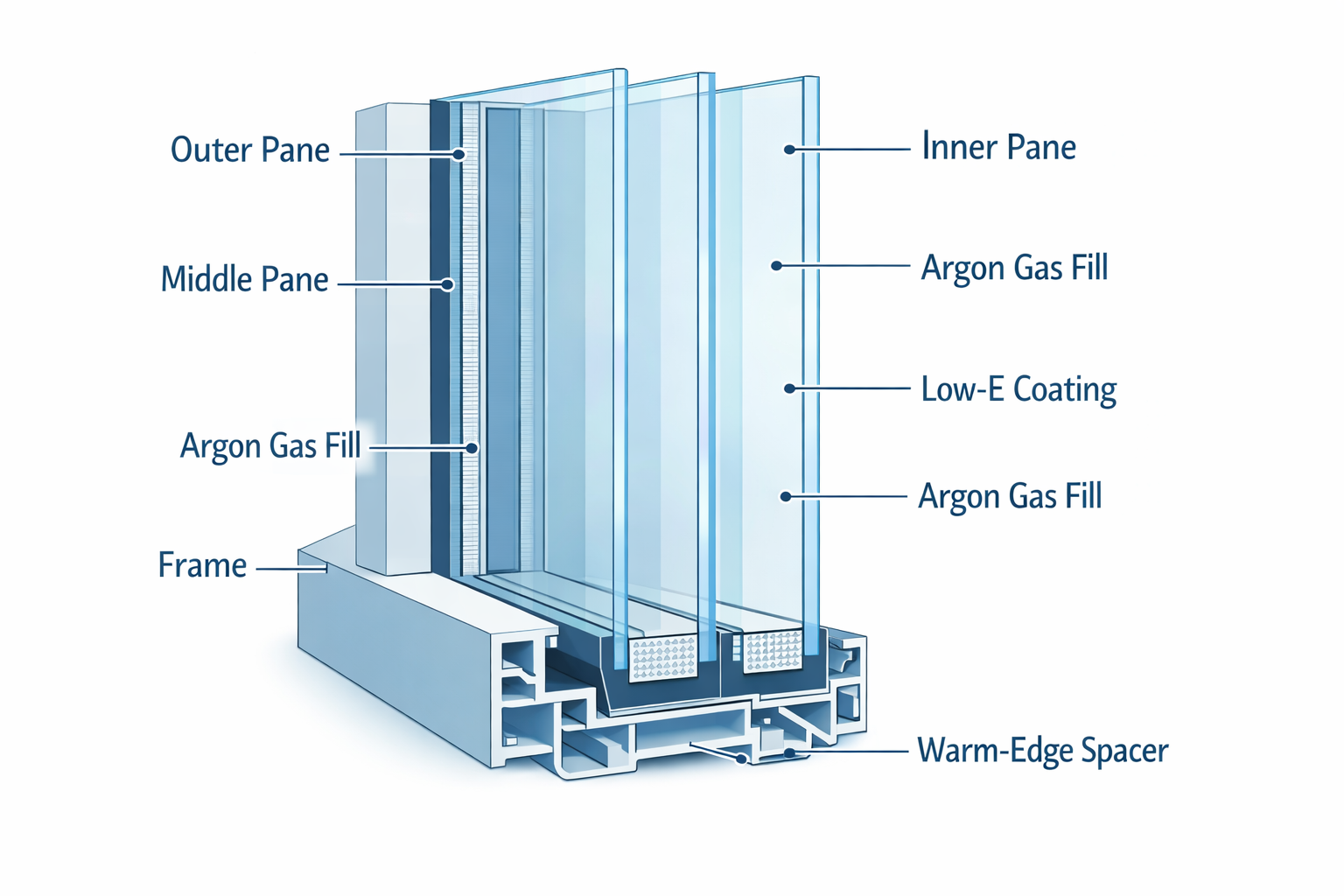
Triple-pane performance starts with the insulated glass unit, but the window performs best when the glazing package and frame are designed together.
Gas Fills, Low-E Coatings, and Warm-Edge Spacers
At the basic level, triple-pane windows use three lites of glass separated by two sealed spaces instead of the single sealed space found in a standard double-pane unit. Those cavities are often filled with argon or, in some premium products, krypton to slow heat transfer through the insulated glass unit. Low-E coatings are added to manage radiant heat transfer. Warm-edge spacers help reduce heat flow around the perimeter where the glass meets the sash.
DOE’s efficient window guidance explains that these details work as a system. The third pane delivers the most value when the rest of the assembly is built around it.
Why Whole-Window Ratings Matter More Than Glass Alone
The term triple glazed windows is often used interchangeably with triple-pane units. The glass package is still only part of the story. NFRC whole-window ratings include the frame and spacer as well as the glazing. A strong insulated glass unit inside a thermally weak frame can still produce a middling whole-window result.
That distinction matters on bid review and submittal review. Contractors should compare certified whole-unit values instead of relying on center-of-glass claims.
What U-Factor, R-Value, and SHGC Tell You
Published window numbers help only when buyers know which ones actually affect comfort, heat loss, and solar gain.
Why U-Factor Leads the Comparison
U-factor measures non-solar heat flow through the window. Lower numbers indicate better resistance to heat loss. DOE notes that NFRC whole-window U-factor is the better comparison value because it includes the frame and spacer, not just the glass.
If a buyer remembers one rule, compare the certified whole-window U-factor first and read the rest of the label second. That habit clears up much of the confusion in the triple pane vs double pane discussion.
Where R-Value Still Fits
R-value still comes up in window conversations, especially when someone searches for triple pane window R-value. R-value describes resistance to heat flow. U-factor describes heat transfer. The two are related, but U-factor is the rating window buyers see and compare most often on NFRC labels.
That is why a quoted R-value by itself is not enough. A better comparison starts with the NFRC label and then moves to climate, orientation, and project priorities.
How Solar Heat Gain Coefficient (SHGC) Changes by Climate
Solar heat gain coefficient, or SHGC, measures how much solar heat passes through the window. Lower SHGC usually works better in cooling-dominated climates because it limits unwanted heat gain. A somewhat higher SHGC can make sense in colder climates where winter sun can help warm interior spaces, depending on orientation, shading, and seasonal exposure.
ENERGY STAR sets climate-zone-specific U-factor and SHGC criteria for residential windows. Lower whole-window U-factors can also support projects in colder zones where stricter fenestration targets apply, although local code adoption and the chosen compliance path still need to be verified.
Where the Real Performance Gains Show Up
The published ratings matter because they affect how the window behaves in the room after installation.
Winter Comfort and Condensation Control
When people ask about triple pane window benefits, the first gain is often winter comfort rather than dramatic utility-bill savings. Better insulating glass keeps the interior glass surface warmer. That reduces the cold-surface effect that makes rooms near windows feel drafty even when outside air is not leaking through the unit.
Condensation control is another practical benefit, especially in colder climates or in homes with higher interior humidity. Warmer interior glass temperatures reduce the chance that indoor moisture will condense on the glazing surface. Efficient Windows Collaborative guidance also connects higher condensation-resistance performance with fewer cold drafts, better comfort, and reduced mold or mildew risk on interior surfaces.
Sound Reduction, UV Control, and Security
Thermal performance is usually the first reason buyers look at triple glazing, but acoustics often come next. Sound reduction is real. It is also easy to overstate. Efficient Windows Collaborative guidance notes that no window creates a complete sound barrier, and better sound control starts with limiting air infiltration.
Triple glazing can help with sound reduction, and varied glass thicknesses or wider air spaces can help further. Poor perimeter sealing can erase part of the benefit, so noise complaints should be evaluated through both glazing design and airtight installation. Low-E coatings can reduce some UV transmission that contributes to fading, but security and UV control still depend on the full specification. Glass type, frame construction, hardware, and options such as laminated glass all affect the final result.
Triple Pane vs. Double Pane Cost
Cost is where the performance discussion becomes a project decision rather than a product comparison.
Installed Price Ranges and What Drives Them
Installed pricing varies widely. Angi’s March 2026 cost guide places triple pane windows cost at roughly $200 to $3,800 per window, with labor often adding about $100 to $800 depending on project scope. Frame material can also shift the price sharply, with fiberglass and composite options often costing much more than basic vinyl units.
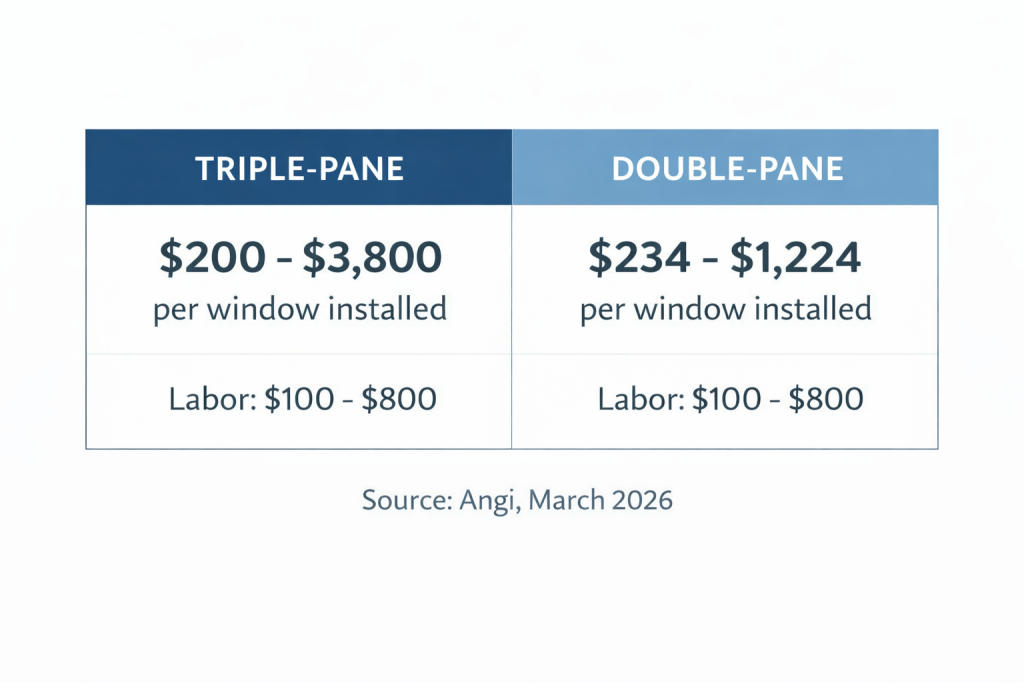
Triple-pane windows sit in a broad pricing band because real job costs depend on replacement versus new construction, opening size, shape, hardware, frame material, and site conditions. A small fixed vinyl unit and a large fiberglass casement are not in the same budget category, even if both use three panes.
Why the Premium Does Not Pay Back the Same Way Everywhere
The triple pane vs double pane decision should be framed as a premium for a better-performing assembly, not as a simple glass surcharge. In many markets, a high-quality double-pane unit with a strong Low-E package and a better frame can outperform a mediocre triple-pane product. The third pane improves insulating potential, but the improvement is not linear. Payback can stretch out in mild climates or in homes where bigger enclosure weaknesses are still doing more damage than the windows.
Air leakage at the rough opening, poor attic insulation, or other unaddressed envelope deficiencies can blunt the return on a more expensive glazing package. That is why cost should be judged against full-project performance, not pane count in isolation.
When the Upgrade Makes Sense
Triple-pane value depends on climate, project goals, ownership horizon, and how well the rest of the enclosure is already performing.
Where Triple-Pane Earns the Premium
For many projects, triple-pane windows make the most sense in colder regions, high-performance homes, or sites where comfort and condensation control matter as much as strict energy payback. ENERGY STAR’s current residential criteria set different U-factor and SHGC requirements by climate zone, with the lowest U-factor thresholds in colder zones. That makes the upgrade easier to justify where better insulating performance materially changes winter conditions. On code-driven projects, lower whole-window U-factors can also make it easier to meet stricter fenestration targets in colder climate zones.
The case also gets stronger in long-term ownership scenarios and in custom builds aimed at tighter enclosures. In those projects, the windows become part of a broader efficiency strategy instead of acting as a stand-alone premium feature.
When Double-Pane May Be the Smarter Use of Budget
That same value equation weakens in mild climates, short ownership horizons, or projects where the budget is already under pressure from more important enclosure work. A homeowner replacing older clear-glass units may still see a meaningful jump in performance with well-specified double-pane Low-E windows that are properly installed and matched to the climate zone.
In that situation, the better question is not simply are triple pane windows worth it. The better question is whether the marginal gain over a well-specified double-pane option justifies the added cost on that specific project. Sometimes the answer is yes. Sometimes the money belongs elsewhere in the enclosure.
What Buyers Often Miss About Frame and Installation Quality
Glass performance gets most of the attention, but delivered window performance depends on two other variables buyers often underestimate.
Frame Material Shapes Whole-Window Results
DOE states that frame material affects overall thermal resistance and contributes to whole-window U-factor. Vinyl, wood, fiberglass, and some composite frames generally provide greater thermal resistance than metal. Metal frames conduct heat quickly unless they use an effective thermal break.
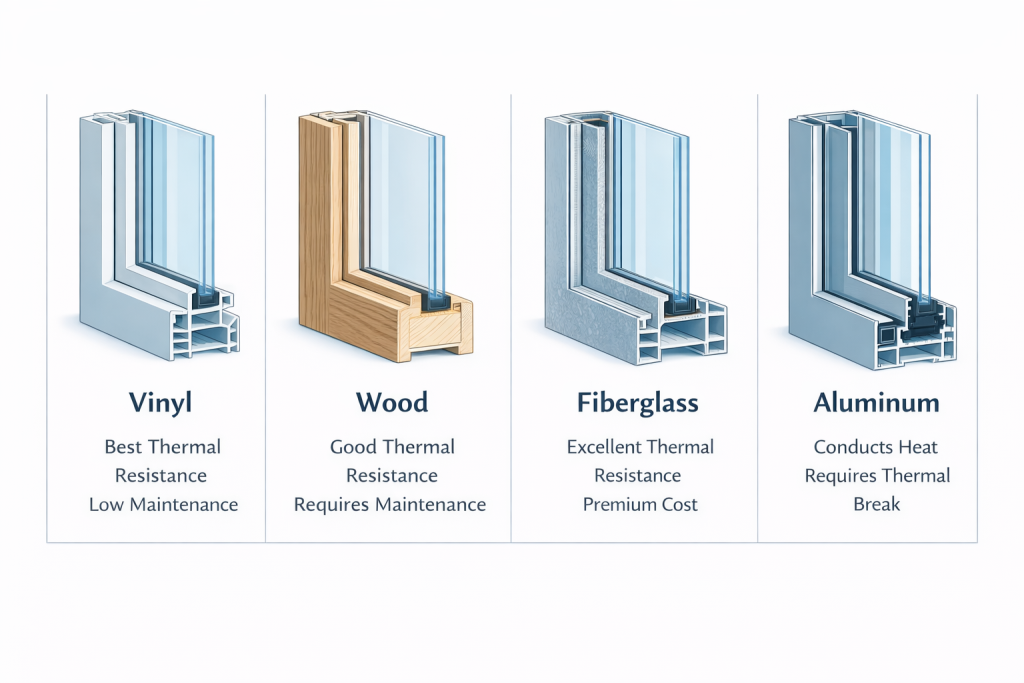
Warm-edge spacers help at the glass perimeter, but the frame still shapes the whole-window result, including the risk of interior cold spots. A contractor reviewing submittals should compare frame class, thermal break strategy, air leakage, and certified whole-unit performance before assuming the glazing package tells the full story.
Installation Quality Determines Delivered Performance
Installation quality is the clearest separator between rated performance and delivered performance. ENERGY STAR states that even the best windows can be drafty if they are poorly installed. Building America guidance adds that proper window installation includes flashing integrated with the weather-resistant barrier and full air sealing around the rough opening.
If the perimeter is not sealed, shimmed correctly, and tied into the drainage plane, the owner can end up paying for a premium unit that never delivers premium comfort. From a contractor’s point of view, the installation scope deserves as much scrutiny as the glazing schedule.
How to Evaluate a Window Before You Buy
A better window decision starts with the label and ends with the installation plan. Before you buy triple-pane windows, check the NFRC label, verify the right ENERGY STAR climate zone for the project, and ask for certified whole-window values rather than center-of-glass numbers. Confirm frame material, air leakage data, spacer type, gas fill, and Low-E configuration. Then review how the installer will flash and air-seal the opening so the rated performance has a fair chance to show up in the finished wall.
That checklist gives a far clearer picture of expected performance and helps buyers judge whether the upgrade fits the project.
Choose a Window Package That Fits the Project
The right window package depends on climate, frame performance, and installation quality as much as the glass itself. A careful review of NFRC data, ENERGY STAR alignment, and installation scope can keep a premium purchase from underperforming in the field. Pane count is where most window conversations start. Whole-window performance, frame material, and installation quality are where the real decision lives.
Frequently Asked Questions
Are triple-pane windows worth it?
They are often worth the premium in colder climates, high-performance homes, and noise-sensitive locations where lower U-factors, better comfort, and improved condensation control matter. In milder climates or short-term ownership scenarios, a well-specified double-pane unit may be the better value.
Do triple-pane windows reduce noise?
They can reduce noise better than many double-pane units, especially when glazing design, air-space configuration, and airtight installation are all working together. Efficient Windows Collaborative notes that limiting air infiltration is one of the biggest steps in improving window sound control.
What is more important, triple pane window R-value or U-factor?
U-factor is usually the more useful comparison tool because NFRC window labels are built around whole-window U-factor and related performance ratings. R-value can still help conceptually, but buyers should compare certified whole-window U-factors first.
Do triple-pane windows stop condensation?
They do not stop condensation in every case, but they can reduce it by keeping the interior glass surface warmer. Indoor humidity, air leakage, and installation quality still affect whether condensation forms.
What should buyers check before choosing triple-pane windows?
Start with the NFRC label, climate-zone fit, and whole-window ratings rather than pane count alone. Then confirm frame material, air leakage data, spacer type, gas fill, Low-E configuration, and how the installer will flash and air-seal the opening.
(**Strategy Note: This article targets the keyword “triple-pane windows” (KD 0, 250 monthly searches, estimated traffic potential 400). Competing content either focused on product promotion from a European manufacturer with limited US building code context, or on retail conversion for a regional installer without sufficient technical depth. This piece was written to fill that gap — addressing whole-window performance ratings, frame material impact, and installation quality, three factors neither competitor covered adequately. Sources include DOE, NFRC, ENERGY STAR, Efficient Windows Collaborative, and Angi’s March 2026 cost data.**)